
GTA 6 Gameplay Systems: Mechanics, AI & Physics Breakdown
 By Nadeem
0 Comments
By Nadeem
0 Comments
Great open-world titles are often remembered for their scenic vistas and narrative milestones, but what keeps players immersed for hundreds of hours is the mechanical friction of moment-to-moment play. In Grand Theft Auto VI, Rockstar Games is executing a fundamental paradigm shift: moving away from loosely scripted arcade sandboxes toward an interconnected, systemic simulation. At Cyber Leek, we break down the revolutionary gameplay systems—from grounded physical inventories and nuanced vehicle handling to patented law enforcement artificial intelligence.
1. The Systemic Philosophy: How Systems Interlock
In traditional open-world games, individual gameplay features often operate in isolated technical silos. Driving physics function independently of pedestrian routines; weather effects are purely cosmetic; and police responses trigger via rigid, binary detection cones. In GTA 6, every mechanic is designed as an interlocking cog in a cohesive ecosystem.
If a sudden subtropical thunderstorm drenches Vice City, the environmental shift immediately ripples across every gameplay layer. Road surface friction drops by half, dramatically increasing vehicle braking distances and introducing hydroplaning risks. Pedestrians dash for covered bus shelters or unfold umbrellas, altering pedestrian density patterns. Outdoor security cameras experience optical rain distortion, and acoustic thunderclaps mask footsteps, creating emergent opportunities for stealth operations. This is the essence of modern systemic game design.
2. Kinematic Locomotion and Movement Mechanics
Character locomotion in GTA 6 strikes an intentional balance between responsive player agency and authentic physical momentum. Leveraging upgraded procedural animation blending, characters move with believable weight and kinetic friction.
Notable locomotion advancements include:
- Expanded Stance Variety: Beyond standard standing, crouching, and sprinting, players now possess access to prone stances and low-profile crawling. This mechanic allows for tactical concealment in tall marsh grass, underneath elevated vehicles, or behind low parapet walls.
- Contextual Environmental Traversal: Vaulting over obstacles, clambering up security fences, and sliding across vehicle hoods adapt dynamically to the character’s velocity and terrain height. Characters stumble realistically when sprinting down steep wet slopes, reinforcing the tactile nature of the world.
- Procedural Hit Reactions: Powered by refined Euphoria kinetic simulation, impacts produce unscripted physical responses. Brushing past pedestrians in crowded markets results in natural shoulder shifts, while near-miss vehicular flybys cause characters to stumble back instinctively.
3. Grounded Inventory and Equipment Management
One of the most consequential departures from previous entries is the complete overhaul of inventory mechanics. The franchise has abandoned the classic “infinite weapon wheel” where a player could conceal dozens of heavy tools inside a jacket magically.
Taking design cues from the grounded realism of Red Dead Redemption 2, GTA 6 introduces physical equipment constraints:
A. On-Person Carry Capacity
Protagonists can carry only what is physically plausible on their person: typically two compact side-items, a utility knife, essential survival items, and a smartphone. Slung across the shoulder or held in hand, a single primary long-form item can be transported, which immediately alters pedestrian and police perception in public spaces.
B. Vehicular Trunk and Duffle Bag Storage
Your vehicle is no longer just a disposable getaway car; it serves as a mobile tactical base. Heavier specialized tools, body armor plates, tactical equipment, and loot duffle bags are physically stored in the trunk and backseat of your personal ride. Preparing for an operation requires planning—retrieving the appropriate gear before stepping away from the vehicle and planning egress routes accordingly.
4. Vehicular Handling and Simulation Physics
Vehicles represent the lifeblood of the sandbox experience, and GTA 6 completely re-engineers handling dynamics to ensure driving feels tactile, rewarding, and deeply differentiated across automotive classes.
Core vehicular innovations include:
- Surface Friction Sampling: The physics engine continuously calculates tire contact patches. Transitioning from dry sun-baked asphalt to wet city tarmac, sandy coastal shores, or thick swamp mud demands genuine throttle modulation and counter-steering skill.
- Dynamic Weight Distribution and Suspension: Acceleration, hard braking, and aggressive cornering trigger authentic chassis roll, pitch, and dive. Muscle cars demonstrate rear-wheel torque sway, while modern all-wheel-drive supercars hug the road with precise downforce.
- Detailed Damage Deformation: Crumple zones deform mathematically based on impact velocity and angle. Tires can suffer sidewall blowouts, suspensions can bend causing steering pull, and radiator punctures lead to gradual engine overheating.
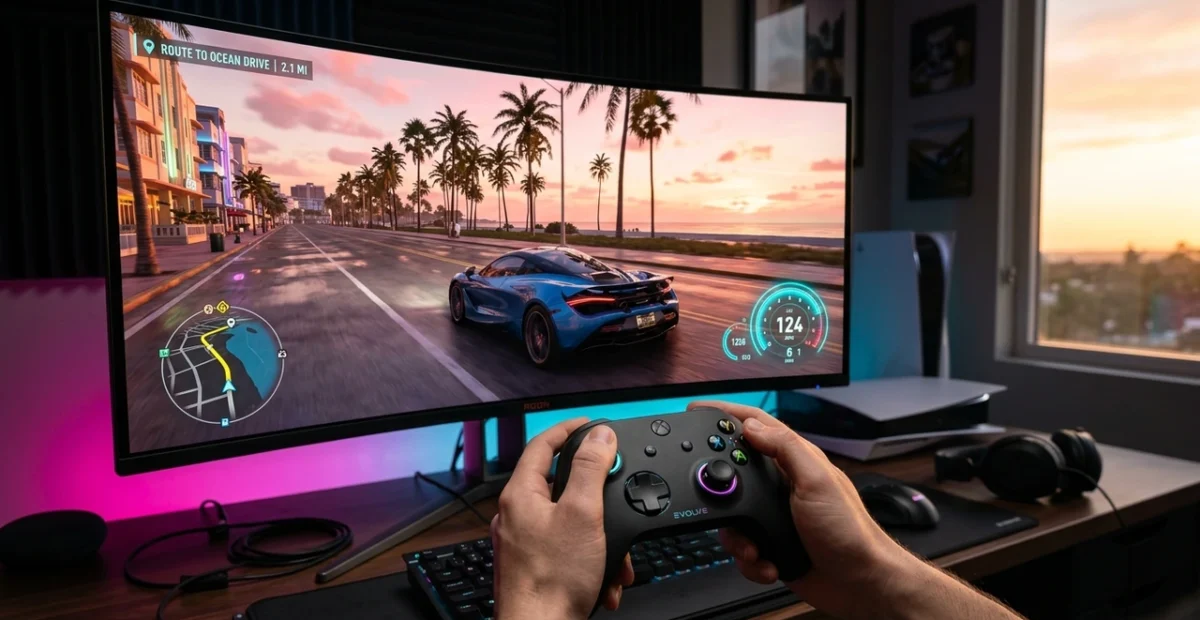
- Interactive Dashboard Cabins: For players favoring the first-person cockpit view, interior dashboards feature functional illuminated digital speedometers, operational GPS screens, and adjustable mirrors that physically reflect surrounding traffic.
5. Dual-Protagonist Tactical Synergy
Operating as a cohesive duo, Jason and Lucia introduce cooperative gameplay mechanics that revolutionize tactical engagements:
- Instantaneous Perspective Shifts: When both characters are co-located, a single button press seamlessly swaps control between them without disorienting camera sweeps or loading screens.
- Cooperative Directives: Players can issue situational commands to their AI companion—such as requesting covering fire, coordinating synchronized entries through multiple access points, or ordering your partner to secure a running getaway vehicle.
- Shared Inventory and Economic Pools: Resources, ammunition caches, and bank balances are pooled, allowing players to allocate upgrades and tactical gear collaboratively.
6. Law Enforcement and Surveillance AI
Law enforcement systems in open-world titles have frequently suffered from artificial “teleporting cops” who spawn instantly around corners. GTA 6 completely redesigns police artificial intelligence around realistic investigation, response times, and forensic awareness.
Key police systemic updates include:
- Witness Reporting and 911 Delays: When an infraction occurs, civilians must physically locate a telephone, reach into their pockets to dial emergency services, or seek out an officer. If the player prevents the call or flees before dispatch, no immediate wanted level triggers.
- Investigative Containment Perimeters: Upon arrival, patrol units do not charge blindly. They establish tactical cordons, interview witnesses, analyze security camera feeds, and search outward systematically from the last known location.
- Vehicle Identification and Description Tracking: Police units remember the make, model, color, and license plate of your getaway vehicle. Changing vehicles, altering paint colors at local auto shops, or concealing the vehicle in a garage effectively breaks the investigative trail.
7. In-Game Technology, Commerce, and Modern Fintech
Reflecting the realities of the digital era, GTA 6 integrates a sophisticated smartphone ecosystem that functions as a central player interface:
- Digital Banking and Mobile Transactions: Cash and digital assets are managed directly through banking applications, allowing players to wire funds, purchase commercial properties, and monitor investments remotely.
- Interactive Security and Hacking: Gaining access to restricted facilities involves bypassing electronic biometric keypads, hacking digital security cameras, and manipulating electronic shutters via smartphone apps.
- Viral Social Media Feeds: The in-game internet culture features dynamic video feeds mirroring real-world viral platforms, where player actions and municipal chaos are captured by NPC smartphones and broadcast across social channels.
8. Frequently Asked Questions (FAQ) About GTA 6 Gameplay Systems
How does the new inventory system compare to GTA 5?
Unlike GTA 5’s infinite weapon wheel, GTA 6 implements a realistic carry system. Characters carry limited gear on their person, while heavy equipment and specialized tools are stored in personal vehicle trunks and duffle bags.
Can players customize vehicle handling and performance?
Yes. Automotive garages throughout Leonida allow players to modify engine tuning, transmission gearing, suspension stiffness, tire compounds, and braking force to adapt vehicles for street racing, off-road mudding, or getaway operations.
Are enterable interiors seamless without loading screens?
Yes. Powered by high-speed NVMe solid-state drive architectures on PS5 and Xbox Series X, players can walk smoothly from bustling outdoor streets into fully modeled stores, restaurants, clubs, and motels without any loading delays.
9. Conclusion: A New Standard for Reactive Sandboxes
The gameplay systems of Grand Theft Auto VI represent an extraordinary milestone in the evolution of open-world design. By rooting every mechanic in physical consistency, intelligent artificial intelligence, and meaningful player choice, Rockstar Games has transformed Leonida from a decorative backdrop into a breathing, reactive simulation.
Stay tuned to Cyber Leek for ongoing mechanics breakdowns, controller optimization guides, and tactical strategies as we continue exploring the outer boundaries of next-generation gaming.