
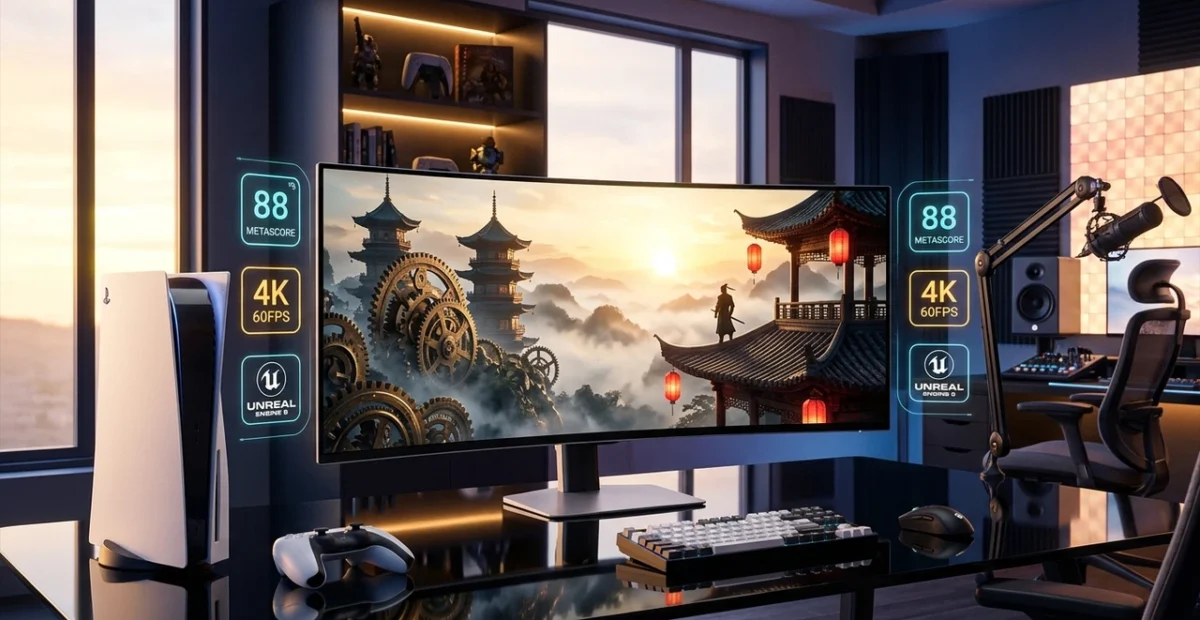

Phantom Blade Zero Game: Global Launch, Critical Reviews, PS5 and PC Performance, Editions
 By Nadeem
0 Comments
Phantom Blade Zero is out, and the first question most people ask is simple: is it worth buying right now? I have put together everything that is confirmed so far in one place: when it came out, what it costs, what is in each edition, how the critics scored it, and how it runs on PS5 and PC. That is the information you need to make the decision, and it is all here without the filler that usually pads out launch-week coverage.
A quick note on how this article was made. I have not finished the game myself, so you will not find fake claims about dozens of hours of playtime here. Everything below comes from official store pages, the studio’s announcements and review roundups. Scores and patches change quickly in launch week, so check the latest numbers before you buy, and expect this page to be updated when they move.
The essentials: who made it, when it came out, what it costs
Phantom Blade Zero was developed by S-GAME. It released on October 29, 2026, which was the evening of October 28 in US time zones, so American players got their hands on it a little earlier than the date suggests. It is available on PS5 and PC, through Steam and the Epic Games Store. No Xbox version has been announced, and there is no sign of one coming soon. The Standard Edition costs $59.99, and the Digital Deluxe Edition costs $69.99. There is no early access, whichever edition you buy, so nobody got a head start by paying more. It is a single-player game, and physical PS5 discs are planned for 2027, with no date or price yet.
That price is worth pausing on, because it is slightly below the $69.99 that has become the standard for big releases. At $59.99 for the Standard Edition, Phantom Blade Zero is positioning itself as a premium game that is not quite charging a premium price, and that matters when you are weighing it against other games competing for the same money.
A swordsman with sixty-six days to live
Phantom Blade Zero is a wuxia-inspired action RPG built around fast sword combat. You play Soul, an assassin who survives a deadly betrayal only to learn that he has just sixty-six days left to live. The setting mixes classic Chinese martial arts fiction with industrial machinery, a look the developers call “kungfupunk,” and it gives the game a visual identity that is immediately different from the dark fantasy that dominates the genre. The world looks like a martial arts film that has been crossed with a machine age, and that combination is doing a lot of the work in making the game memorable.
The sixty-six-day countdown is the hook of the story, and it is more than a plot device. It also returns in the post-game 66 Days mode, which works differently from the main campaign. On the combat side, reviewers describe a system with no stamina bar. You parry, counter and chain attacks, which makes it feel closer to a character action game than to a typical Soulslike. If you have been burned out on stamina-based combat, where every swing is a resource decision, that is a big part of the appeal. The game wants you to be aggressive, to meet attacks with parries rather than backing away to recover, and that changes the rhythm of every fight.
What the critics agreed on, and where they split
As of November 3, the review aggregators had settled around the high 80s. Output Lag’s roundup lists a Metacritic score of 88 from 33 critic reviews, an OpenCritic average of 88 from 62 reviews, and a “Very Positive” Steam rating of 90 percent from over 65,000 player reviews. Early on, OpenCritic was higher at around 91 and slid down as more outlets filed, so do not be surprised if the numbers keep moving a point or two in either direction. A score in the high 80s with that many reviews behind it is a strong result, and the player rating on Steam lines up with the critics rather than contradicting them, which is not always the case.
In that roundup, nearly every critic praised the same things. Combat is the clear highlight: the parry-and-counter system is the thing most reviewers talk about first, and it is the reason the game is being recommended. Boss fights come next, with bosses that have multiple phases, and you restart from the phase where you died rather than from the beginning of the fight, which removes the most frustrating part of the genre. Art direction and animation get consistent praise, with the martial arts choreography and the overall look singled out again and again. Exploration is praised too, with regions that connect through shortcuts and gated paths, and hidden bosses to find for players who go looking. And the weapons: there are roughly thirty of them, and because upgrades can be refunded, switching builds does not punish you, which encourages experimentation instead of locking you into one choice.
Where reviewers disagree
Where reviewers disagree is just as useful to know before you spend money. The story split critics almost evenly: some liked the revenge plot and the ending, while others found it confusing or thin. Regular enemies are the most common complaint, because bosses win praise but ordinary enemies get repetitive later in the game, and the stretches between boss fights can start to drag. The English voice acting divided reviewers too: several found the English dub stiff and recommended playing with the Chinese audio and subtitles, which is worth knowing before you start, since changing it mid-game is a hassle. And enemies that stay dead split opinion as well: some players like that cleared areas stay cleared, while others feel it empties the world and makes backtracking feel lonely. No outlet’s score replaces your own taste, so if you can, read one or two full reviews rather than just the number.
How it runs: PC, PS5 and Steam Deck
The PC version is the safest choice, according to the reviews summarised by Output Lag. Shaders compile the first time you launch the game, and after that it runs well, with only rare traversal stutter. One reviewer measured around 100 frames per second at 4K on high settings with DLSS set to Quality on an RTX 4080, which is a strong result for a game that looks this good. Ray tracing is the setting that costs the most performance, so if your frame rate is struggling, that is the first thing to turn down. The official minimum PC requirements listed on store pages include an Intel Core i7-8700K or AMD Ryzen 5 3600, 16 GB of RAM and an SSD, aimed at 1440p at 60 frames per second with upscaling enabled. TechSpot also reports a 145 GB install size, with around 300 GB of free space needed while pre-loading, so clear some room before you start the download. The PC version uses Denuvo DRM. Always check the official Steam or Epic page for the full and current requirements list before buying, because launch-week requirements can change.
On PS5, the picture is more mixed. Performance mode holds 60 frames per second most of the time but reportedly drops in some areas and during certain boss fights, which is exactly when you least want it to. Graphics mode is said to struggle on the base console, so it is hard to recommend unless you do not mind uneven performance. The PS5 Pro offers three modes and is reported to give the smoothest console experience, and if you own a Pro, the choice is straightforward. If you play on a base PS5 and you are sensitive to frame drops, it may be worth waiting for patches, because the drops are reported in the fights where timing matters most.
Steam Deck: not a good fit yet
On Steam Deck, the news is bad for now. Early testing found the game running below 30 frames per second even at the lowest settings, with battery life of only two to two and a half hours. For now, it is not a good fit for the Deck, and that is unlikely to change quickly given how demanding the game is.
The two editions, and the physical versions coming later
There are two digital editions at launch. Both include the full game, and neither includes early access or any gameplay advantage. The Standard Edition costs $59.99 and includes the full game. The Digital Deluxe Edition costs $69.99 and adds two exclusive outfits, Wulin Legend and Blood-Steel Form, along with a digital artbook and a digital soundtrack. Pre-orders came with two early unlock items, the Treasure Basin accessory and the Legacy outfit, but store pages note that these can also be earned through normal progression, so missing the pre-order window does not lock you out of anything.
In short, the Deluxe Edition is a cosmetic and extras upgrade. If you only care about the game itself, the Standard Edition gives you the same experience, and the extra ten dollars buys you outfits and a soundtrack rather than content. For collectors, S-GAME has announced three physical PS5 editions for 2027: Standard, Deluxe and an Ultimate edition with a steel case. No release month or price has been given, and the contents of the boxed Deluxe version have not been detailed, so there is not much to plan around yet beyond knowing that a physical version is coming.
How long it takes, and how hard it is
Reviewers put the main story at roughly 25 to 30 hours, and about 40 to 50 hours if you do most of the side content. That is a reasonable length for an action RPG: long enough to feel substantial, short enough that it does not become a second job. There are three difficulty levels, Wayfarer, Pathbreaker and Hellwalker, and you can switch between them at any time, so getting stuck on a boss does not mean restarting the game. Dying carries no penalty, and some accessories can make the parry window more forgiving, which means the game is more approachable than its genre suggests. For players who want the opposite experience, the post-game 66 Days mode limits you to sixty-six deaths, which turns the countdown from a story device into a genuine challenge.
Should you buy it now
Based on the reviews rather than my own playtime, this is how it looks to me. It is a strong pick if you enjoy fast, parry-focused combat and boss fights, you like trying different weapon builds, and you play on PC or PS5 Pro, where the performance is at its best. You may want to wait if you play on a base PS5 and frame drops bother you, you are sensitive to launch-week bugs, or you need a story that grabs you from the start, because the story is the most divisive part of the game. It is probably not for you if you want a true open world, you plan to play on Steam Deck, or you are looking mainly for a deep narrative rather than great combat. Because the game is only a few days old, the safest approach is to check the latest patch notes and player reviews on your platform before you buy, and to start on the Standard Edition unless the Deluxe outfits genuinely appeal to you.

Like a Dragon: Pirate Yakuza in Hawaii Joins PS Plus: Majima, Pirates, and Why It Is Worth Downloading
Goro Majima wakes up on a beach with no memory, no crew and no idea who he is. By the…
Read More →
Black Friday 2026 Gaming Deals: The Best PS5 and Xbox Prices, and Why No Console Is on Sale
Black Friday 2026 falls tomorrow, Friday 27 November, and the gaming sales are already running. Amazon’s Black Friday week sale…
Read More →
PS Plus December 2026 Games: Tony Hawk’s Pro Skater 3+4, Dragon Ball Xenoverse 2 and Amnesia: The Bunker
Sony has revealed the final PlayStation Plus monthly games of 2026, and December closes the year with a lineup that…
Read More →
Gothic 3 Classic Is Out Now on PS5 and Xbox: Price, Platforms, and What the Console Version Changes
Twenty years after it first arrived on PC in a rough, unfinished state, Gothic 3 is finally playable on a…
Read More →