

Modern Warfare 4 Multiplayer: Maps, Modes, Weapons, Launch Reception and Known Issues
 By Nadeem
0 Comments
Call of Duty: Modern Warfare 4 has been out for less than two weeks, and the conversation around its multiplayer has already changed several times. Before launch, most of the talk was about beta leaks and whether Infinity Ward was repeating old mistakes. Now that the game is live, there is real information to work with: what is actually in the multiplayer, how critics and players reacted, and which problems the studio is trying to fix. This article collects the confirmed details in one place, so you can see the launch clearly instead of through a week of conflicting posts.
One honest note before the details. I have not put in enough hours in the multiplayer to write a full review, so I am not going to pretend otherwise. Everything here comes from official announcements and public reporting, and where reports disagree or something is still unconfirmed, I say so. The launch is still moving, and some of what is written here will be out of date within a month.
The basics: who made it, when it came out, where you can play it
Modern Warfare 4 was developed by Infinity Ward, with Beenox handling the PC version and Digital Legends working on the Nintendo Switch 2 version. It released on October 23, 2026, with campaign early access starting October 16 for eligible digital pre-orders. It is available on PS5, Xbox Series X|S, PC through Steam, Battle.net and Xbox on PC, and Nintendo Switch 2. There is no PS4 or Xbox One version, which is a clean break from the last generation and a decision that shapes several of the arguments below. It is not available on Game Pass at launch, which matters if that was your plan for playing it. The game ships with three modes in the box: Campaign, Multiplayer and DMZ.
What changed from the beta talk
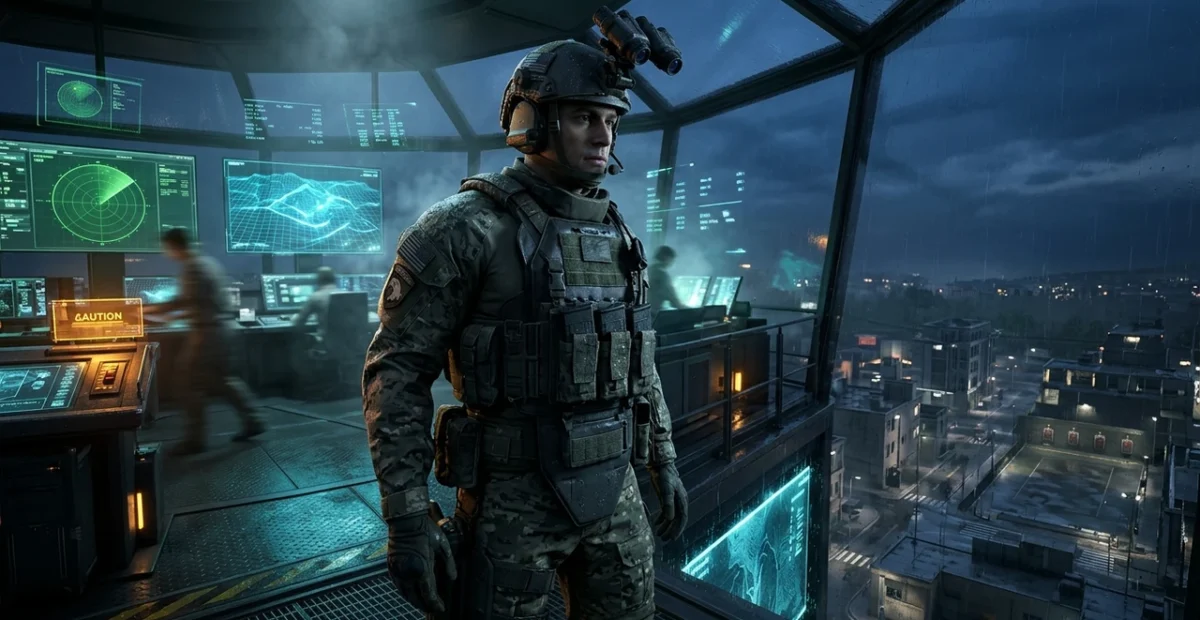
The original rumours before launch said the multiplayer would feel like a copy of Modern Warfare II, and that Infinity Ward was playing it safe to the point of repetition. The final game is more specific than that. Infinity Ward describes it as a return to boots-on-the-ground combat with grounded movement that still aims to feel quick and responsive. The studio also introduced a system it calls Ballistic Authority, which reworks aiming, recoil and weapon handling to make gunplay more consistent. According to TechSpot’s summary of the reveal, that includes removing bloom, making recoil more predictable, and adding more options for climbing and jumping.
In plain terms, the game is not trying to copy the fast omnimovement style of recent Black Ops games. It is trying to sit somewhere in the middle, with grounded movement and tighter, more predictable shooting, where a gunfight is decided by aim and positioning rather than by who can slide the fastest. Whether that balance works is exactly what players are arguing about now, and the argument is really about taste as much as it is about design. Some players love the return to something more deliberate. Others think it feels slow after years of faster movement.
Maps, modes, and the Kill Block experiment
The game launched with 12 new core 6v6 maps. Infinity Ward has named them as Cachette, Coal, Lithium, Lotus, Mumbai, Munition, Nautical, Reactor U92, Rooftops, Sentry, Silkworm and Transit 213. Six of them were playable in the August beta, so half the launch map pool was already familiar to players who tested the game early, and the other half arrived fresh on launch day. Twelve maps is a solid launch number for a Call of Duty game, though the quality of the maps matters more than the count, and that is where the complaints start.
The launch playlist covers the usual Call of Duty staples as well as some newer options. The respawn modes are Team Deathmatch, Domination, Hardpoint, Kill Confirmed, Free for All, Counter Attack, Inflation and Hijack. The round-based modes are Search and Destroy, Gunfight and Gunfight 10v10. Ground War is represented by Combat Outpost and other Ground War modes, and the party modes are Gun Game and Drop Zone. It is a broad playlist, and there is very little here that will surprise a long-time player, which is both a comfort and, for the critics, part of the problem.
Kill Block, the genuinely new idea
The most unusual addition is Kill Block, a modular arena set in the Westbridge Training Facility. Instead of loading the same map every time, it combines sections in different ways. Infinity Ward says more than 500 layouts are possible, and at launch it supports Gunfight and Gunfight 10v10. It is the one genuinely new idea in the multiplayer package, and it is the thing that will decide whether the game feels fresh after a month or starts to feel like a map rotation you have already memorised.
Weapons, Gunsmith and progression
According to the studio, the launch Create-a-Class system includes 33 weapons, made up of 24 primary weapons, 8 secondary weapons and 1 melee weapon, along with more than 500 standard attachments and 28 Apex Attachments. It also includes 18 perks and 17 killstreaks. The redesigned Create-a-Class now ties operators and killstreaks into each individual loadout, so changing your loadout changes more than just your gun.
A few features are worth explaining, because they change how progression feels. Apex Attachments unlock at the end of a weapon’s progression. They sit outside the normal attachment slots and can change how a weapon behaves, not just its stats, which makes finishing a weapon’s grind feel like more than a number going up. Gunny is an optional tool that assembles builds from attachments you have already unlocked, aimed at close range, balanced or long range play. Infinity Ward says these builds are made by its own team, which is meant to reassure players who do not want to spend an evening in the Gunsmith. Attachment unlocks are no longer repeated per gun: once you unlock an attachment, it becomes available on compatible weapons, which removes one of the most tedious grinds in recent Call of Duty games. Prestige has two paths. Classic Prestige resets level unlocks, and Regular Prestige returns you to level 1 but keeps your unlocks, so you can choose how punishing you want the reset to be. And camo progression now carries across Multiplayer, DMZ and Warzone, so progress in one mode counts everywhere.

How the launch has actually gone
The reception has been split along a clear line: the campaign and DMZ are praised, while the multiplayer is where most of the complaints are. Review aggregators place the game at around 84 to 86 on Metacritic in early reports, which several outlets describe as the series’ best critical score in many years, well above last year’s Black Ops 7. Reviewers singled out the campaign and the DMZ mode, and they were more cautious about multiplayer, pointing to matchmaking, uneven maps and a formula some called safe. A score in the mid-80s for a Call of Duty game is a strong result, and it is mostly the single-player and extraction sides of the package that earned it.
Player reaction has been rougher. Steam reviews were extremely positive during campaign early access, but they dropped after multiplayer opened, which tells you where the disappointment is concentrated. Sources give different numbers, with some reporting figures around 60 percent positive in the first days after full launch and others reporting around 80 percent overall, so treat any single percentage with caution. The gap between those two figures is itself informative: the early days were rough, and the overall picture looks better once more players have had time to settle in.
The most common complaints
The most common player complaints I found in public reporting are threefold. Spawns and map design: some players say spawns and a few maps feel unfair, with enemies appearing in places that make no sense. Skill-based matchmaking: reports say there is no open playlist that ignores skill-based matchmaking, and players have complained about long queues and tough lobbies. And time to kill: some players feel gunfights are slower than in earlier Modern Warfare games, which makes the grounded movement feel sluggish rather than deliberate. Infinity Ward has responded publicly to the backlash and has said it wants every match to be a good one. One report says the update on October 25 fixed spawns, exploits and crashes, but not the bigger matchmaking questions, and points to Season 1 as the next major change. Because that comes from a single source, I would wait for official patch notes before treating the details as settled. Activision said Season 1 would begin shortly after launch, and one report gives November 6, but check official channels for the confirmed date.
DMZ is back, and Warzone is changing with it
DMZ returned as a full mode in Modern Warfare 4. It is an extraction mode set in a region called Hajin, with story missions, side activities, AI enemies, other players and persistent progression. You can play solo or with a squad, and it is the mode that reviewers praised most alongside the campaign. For players who drifted away from Call of Duty’s multiplayer, DMZ is the most likely reason to come back.
Activision has also said that Modern Warfare 4 content and progression will start to integrate with Warzone in Season 1. Two new Warzone maps are confirmed: Zodiac for Resurgence and Hajin for Battle Royale. Warzone also stops being playable on PS4 and Xbox One once Season 1 begins, which is the final step in the series’ move away from the last generation. If you are still playing Warzone on a PS4 or Xbox One, Season 1 is your deadline to upgrade.
A note for PC players
Infinity Ward and Beenox have said they are focusing on PC performance, with upscaling options, frame generation, better mouse responsiveness and shader preloading. TPM 2.0 and Secure Boot were reported as requirements, which is worth checking before you buy, since it has caught people out on other recent releases. The beta specs were not guaranteed to match the final ones, so always check the official store page for current requirements rather than trusting a specs list from August.
Should you buy it for multiplayer
Based on what has been reported so far, here is how I would think about it. It is a good fit if you mainly want the campaign and DMZ, you like grounded gunplay and big weapon customisation, and you are comfortable waiting for balance patches. The campaign and DMZ are the strongest parts of the package, and they are strong enough to justify the purchase on their own for a lot of players. You may want to wait if your main goal is competitive multiplayer, because spawns, matchmaking and time to kill are still being discussed, and Season 1 is likely to change things. And think twice if you were hoping to play on PS4 or Xbox One, since those versions do not exist, or if you plan to use Game Pass, since the game is not part of it at launch. The multiplayer will probably be a better game in a month than it is today, and the campaign and DMZ are already good. Which of those two facts matters more to you is the real buying decision.

Like a Dragon: Pirate Yakuza in Hawaii Joins PS Plus: Majima, Pirates, and Why It Is Worth Downloading
Goro Majima wakes up on a beach with no memory, no crew and no idea who he is. By the…
Read More →
Black Friday 2026 Gaming Deals: The Best PS5 and Xbox Prices, and Why No Console Is on Sale
Black Friday 2026 falls tomorrow, Friday 27 November, and the gaming sales are already running. Amazon’s Black Friday week sale…
Read More →
PS Plus December 2026 Games: Tony Hawk’s Pro Skater 3+4, Dragon Ball Xenoverse 2 and Amnesia: The Bunker
Sony has revealed the final PlayStation Plus monthly games of 2026, and December closes the year with a lineup that…
Read More →
Gothic 3 Classic Is Out Now on PS5 and Xbox: Price, Platforms, and What the Console Version Changes
Twenty years after it first arrived on PC in a rough, unfinished state, Gothic 3 is finally playable on a…
Read More →